As Lionel Messi dribbles at the iconic Maracana stadium and thousands descend on Rio de Janeiro for the 2014 Soccer World Cup, engineers at IBM's labs in Brazil provide real-time updates to city administrators on traffic snarls, mudslides on the beaches and weather shifts.
"Smarter human systems using predictive analytics are innovations researchers there are creating and deploying," says IBM's John Cohn.
An IBMer for thirty years, Cohn's designation, reads 'IBM Fellow.' Much of what he does within IBM and without is essentially to do with marrying innovation with sustainability; smart computing with human lives and science with simplicity.
An IBM Fellow is the top technology post at Big Blue and since there are only 70 of them among the giant's 4.2 lakh employees, it immediately puts Cohn on a pedestal. Besides, Cohn is chief scientist for electronic design automation with 50 patents. He helps build the chips at the heart of IBM's mainframe computers as well as the chip brains in video game consoles.
Cohn is a self-proclaimed 'mad scientist' with a passion for science, and sustainability. But where does the 100-year-old behemoth like IBM gets its cutting-edge ideas from, in these days of six-month-old startups? Ideas today, Cohn says, can come from anywhere in the world.
And that's where the company's global footprint helps, especially at research labs in Brazil, India and Israel. "Ideas need not come only from startups. Ideas themselves can have startup status in that they can be nurtured and mentored within a behemoth," he says.
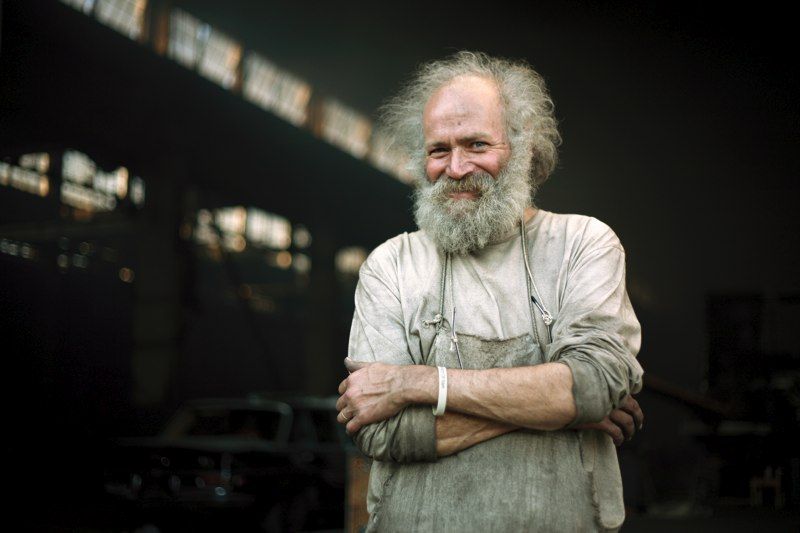
"I think large, structured organisations like ours actually realise the need for a few creative loose cannons to keep things fresh. In fact, when I think of my most senior technical colleagues, the IBM Fellows, they're nearly all a little offbeat."
IBM is the only global firm that has everything from particle theorists all the way up to business theorists and everything in between. Cohn feels ideas also come from where they are most needed. With infrastructure bottlenecks, poor resource management and lax ecological enforcement threatening to stymie India's future growth, smart, local solutions are the key.
"IBM's Burlington semiconductor unit was an energy guzzler," says Cohn. "I sat with the local engineering team and tweaked the instrumentation panels, which reduced overall energy cost by 40% each year, up to a few millions of dollars." What that small change triggered was IBM's Smarter Planet initiative.
"We're figuring out how to use information technology to make the world run more sustainably," says Cohn of the project. The electric grid today is not more sophisticated than it was when Thomas Edison invented the light bulb.
"By putting more intelligence into the endpoints of the grid, houses and factories, we will be able to calibrate electrical generation to meet the need. Without that, you have to always over-generate," says Cohn.
"You're using more fuel, putting more carbon in the air." Cohn's visit to Bangalore, among other things, was to see how the local software lab created a solar-powered array to drive energy efficiency for data centres.
The array is spread over 6,000 squarefeet of rooftop covering of the lab in Bangalore and can generate 50-kilowatt of electricity for 330 days a year, an average of five hours a day, taking the energy load off the data centres.
"Every one of the IBM Fellows love to come down to India because centres here have all the elements, from the entrepreneurial to the geeky, cutting across products, platforms and technologies," he says. Cohn's also involved with the IBM's India Software Labs (ISL) in big data technology which is a focus area the lab.
But Cohn is not your tied-to-the-comp closet geek. As a mission to popularise science, he frequently takes his traveling 'Jolts and Volts' electricity show to schools, community groups, universities and museums across the US, roughly 50,000 have taken part, including diverse venues as the New York Hall of Science, The National Building Museum in Washington DC and frequent shows at the Disney Epcot Center in Florida.
"I am really a nerd who just loves science," he says. "The difference between my shows ten years back and those done today is that kids today understand sustainable development. They realise that there have to be technology solutions to improve energy efficiency. Earlier, this awareness was less. Only a few kids would be keen on the tech aspects of devices."
Meshing work with passion, Cohn cochairs IBM's company-wide Technical Education Outreach steering committee where he and other volunteers go to school to simplify science and technology. The root of an idea and its germination begin when a conversation gets going within the company, says Cohn.
"The most important thing for a company of our size is to make it easy for folks to network and connect with employees in very different disciplines from their own. IBM has a variety of programmes to bring folks together around ideas. We use a mix of face-to-face and virtual collaborations," he says.
Should ideas, and the conversations surrounding them, lead to incremental innovation or the big leap forward? Steady incremental innovation is necessary and the history of computing itself shows the value of moving one at a time.
"At some point, you have to take bold steps too. Create technology that can change the world. Big companies are great about incremental innovation," says Cohn. One of the big leaps that IBM has taken is Project Watson, developed over the past four years by a team of IBM scientists, to accomplish a grand challenge: build a computing system that rivals a human's ability to understand human language and answer questions with speed, accuracy and confidence.
"When IBM scientists began this project, others in the scientific community believed this task to be impossible," says Cohn. "It represents a tremendous breakthrough in computers understanding natural language, real language that is not specially designed and encoded just for computers, but language humans use to capture and communicate knowledge."
Cohn has worked with hundreds of smart IBMers round the world-including at the Bangalore centre, on the implementation of the P7 processor chip that makes up Watson's hardware. He played the role of a leader in the development of the software tools and methodologies used to create the P7 chip.
Deep analytics, as epitomised by Project Watson, technologies for a smarter planet, cloud computing and targeting growth markets, are the strategic themes that big technology firms should talk about and work on, says Cohn: "Stay passionate about your work, that's what I tell folks I mentor. Nothing fuels innovation like passion. Nothing kills innovation than lack of passion."
"Smarter human systems using predictive analytics are innovations researchers there are creating and deploying," says IBM's John Cohn.
An IBMer for thirty years, Cohn's designation, reads 'IBM Fellow.' Much of what he does within IBM and without is essentially to do with marrying innovation with sustainability; smart computing with human lives and science with simplicity.
An IBM Fellow is the top technology post at Big Blue and since there are only 70 of them among the giant's 4.2 lakh employees, it immediately puts Cohn on a pedestal. Besides, Cohn is chief scientist for electronic design automation with 50 patents. He helps build the chips at the heart of IBM's mainframe computers as well as the chip brains in video game consoles.
Cohn is a self-proclaimed 'mad scientist' with a passion for science, and sustainability. But where does the 100-year-old behemoth like IBM gets its cutting-edge ideas from, in these days of six-month-old startups? Ideas today, Cohn says, can come from anywhere in the world.
And that's where the company's global footprint helps, especially at research labs in Brazil, India and Israel. "Ideas need not come only from startups. Ideas themselves can have startup status in that they can be nurtured and mentored within a behemoth," he says.
"I think large, structured organisations like ours actually realise the need for a few creative loose cannons to keep things fresh. In fact, when I think of my most senior technical colleagues, the IBM Fellows, they're nearly all a little offbeat."
IBM is the only global firm that has everything from particle theorists all the way up to business theorists and everything in between. Cohn feels ideas also come from where they are most needed. With infrastructure bottlenecks, poor resource management and lax ecological enforcement threatening to stymie India's future growth, smart, local solutions are the key.
"IBM's Burlington semiconductor unit was an energy guzzler," says Cohn. "I sat with the local engineering team and tweaked the instrumentation panels, which reduced overall energy cost by 40% each year, up to a few millions of dollars." What that small change triggered was IBM's Smarter Planet initiative.
"We're figuring out how to use information technology to make the world run more sustainably," says Cohn of the project. The electric grid today is not more sophisticated than it was when Thomas Edison invented the light bulb.
"By putting more intelligence into the endpoints of the grid, houses and factories, we will be able to calibrate electrical generation to meet the need. Without that, you have to always over-generate," says Cohn.
"You're using more fuel, putting more carbon in the air." Cohn's visit to Bangalore, among other things, was to see how the local software lab created a solar-powered array to drive energy efficiency for data centres.
The array is spread over 6,000 squarefeet of rooftop covering of the lab in Bangalore and can generate 50-kilowatt of electricity for 330 days a year, an average of five hours a day, taking the energy load off the data centres.
"Every one of the IBM Fellows love to come down to India because centres here have all the elements, from the entrepreneurial to the geeky, cutting across products, platforms and technologies," he says. Cohn's also involved with the IBM's India Software Labs (ISL) in big data technology which is a focus area the lab.
But Cohn is not your tied-to-the-comp closet geek. As a mission to popularise science, he frequently takes his traveling 'Jolts and Volts' electricity show to schools, community groups, universities and museums across the US, roughly 50,000 have taken part, including diverse venues as the New York Hall of Science, The National Building Museum in Washington DC and frequent shows at the Disney Epcot Center in Florida.
"I am really a nerd who just loves science," he says. "The difference between my shows ten years back and those done today is that kids today understand sustainable development. They realise that there have to be technology solutions to improve energy efficiency. Earlier, this awareness was less. Only a few kids would be keen on the tech aspects of devices."
Meshing work with passion, Cohn cochairs IBM's company-wide Technical Education Outreach steering committee where he and other volunteers go to school to simplify science and technology. The root of an idea and its germination begin when a conversation gets going within the company, says Cohn.
"The most important thing for a company of our size is to make it easy for folks to network and connect with employees in very different disciplines from their own. IBM has a variety of programmes to bring folks together around ideas. We use a mix of face-to-face and virtual collaborations," he says.
Should ideas, and the conversations surrounding them, lead to incremental innovation or the big leap forward? Steady incremental innovation is necessary and the history of computing itself shows the value of moving one at a time.
"At some point, you have to take bold steps too. Create technology that can change the world. Big companies are great about incremental innovation," says Cohn. One of the big leaps that IBM has taken is Project Watson, developed over the past four years by a team of IBM scientists, to accomplish a grand challenge: build a computing system that rivals a human's ability to understand human language and answer questions with speed, accuracy and confidence.
"When IBM scientists began this project, others in the scientific community believed this task to be impossible," says Cohn. "It represents a tremendous breakthrough in computers understanding natural language, real language that is not specially designed and encoded just for computers, but language humans use to capture and communicate knowledge."
Cohn has worked with hundreds of smart IBMers round the world-including at the Bangalore centre, on the implementation of the P7 processor chip that makes up Watson's hardware. He played the role of a leader in the development of the software tools and methodologies used to create the P7 chip.
Deep analytics, as epitomised by Project Watson, technologies for a smarter planet, cloud computing and targeting growth markets, are the strategic themes that big technology firms should talk about and work on, says Cohn: "Stay passionate about your work, that's what I tell folks I mentor. Nothing fuels innovation like passion. Nothing kills innovation than lack of passion."